
July 2026 · The Qnèctra Systems Brief™
The Intelligence You're Renting
July Debrief
Welcome back to The Qnèctra Systems Brief — a monthly note on the art and architecture of modern operations.
Every operator has lived this one. The person who actually knows how the thing works books two weeks off, and the operation quietly slows down. A decision that used to take an hour takes a day, because the one person who could make it cleanly is on a beach with their phone off. Work routes around the gap the way water routes around a rock.
Everyone calls that person indispensable and means it as a compliment. What it describes is a liability that never appears on any statement. The intelligence running that corner of the business was never on the balance sheet. It was on the payroll. The whole time, the operation was renting it, paying every month for judgment that repeats as salary, caps at what any one person can carry, and walks out the door the day they take a better offer.
Last month I specified the five-element environment an AI agent has to inherit before it can act as a business actor. This month picks up the thread that opened. An operation that has built that environment has done something quieter and more valuable than make an agent safe to delegate to: it has started converting intelligence it was renting into intelligence it owns.
That is the conversion July sits with. Systems that endure are the ones that stop depending on which person happens to be in the building. That's where July goes.
Signals: The Bill and the Dividend
The market is splitting into operations that paid for AI and operations that own something because of it. Four data points from the last few weeks show the line forming.
1. A bank economist says the productivity gains are years away. Deutsche Bank's chief economist stated publicly this month that AI productivity gains will not materialize for years. That is not an AI skeptic or a tech pundit; it is a major bank's economist putting a timeline on the gap. The dividend is real but deferred, and the operations that built foundations first will collect it when it arrives.
2. Failed AI projects are now compressing IT budgets. CIO Dive reported that write-offs from failed AI pilots are flowing downstream into the budgets that follow them. The pilots deployed without an operating environment did not fail quietly; they are taxing the next cycle of spend. Deployment without a foundation produces an expense with a tail.
3. Starling Bank cut 130 roles while citing a harder lean into AI. A fintech bank made the headcount version of this concrete. I am not going to read that as a template: cutting roles converts intelligence into nothing unless the environment was built to hold what those roles carried. The signal is the market's framing, not an endorsement of it.
4. "AI exhaustion" has entered the B2B vocabulary. The fatigue from initiatives that consumed budget and attention without producing measurable return now has a name. Exhaustion is not evidence that AI underdelivers. It is evidence that deployment on top of an operating environment produces an asset, while deployment without one produces a bill.
Same split, four doors. One side paid. The other side owns.
Framework in Action
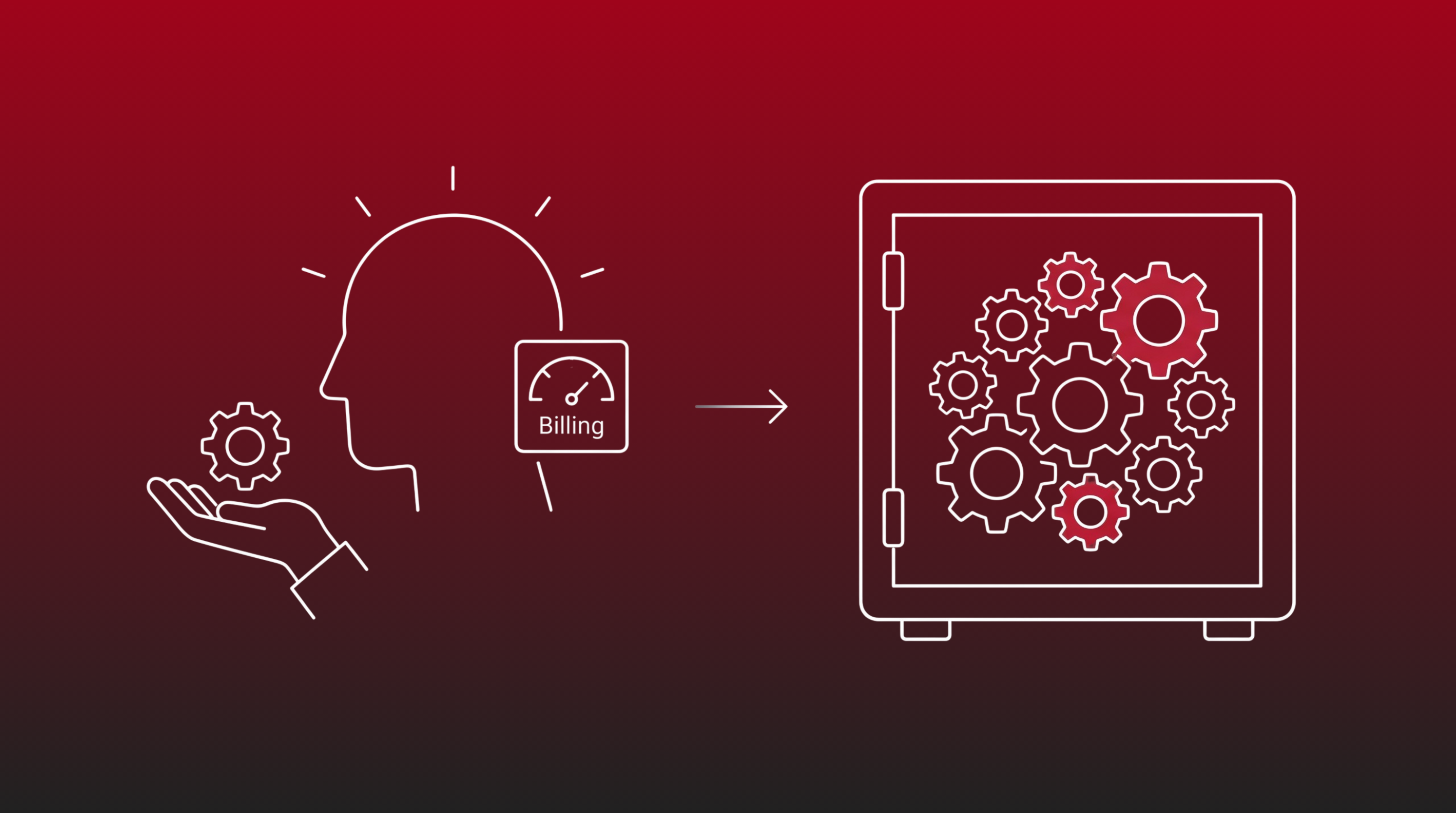
Running the ROI model to its third layer
In April I laid out three-layer ROI economics, the model for pricing what an AI deployment is actually worth. Layer 1 is the cost of building the environment. Layer 2 is the cycle time and rework the agent removes this quarter: the return you can put in a spreadsheet by Friday. April named a third layer and then, honestly, only sketched it. This edition prices it.
Layer 3 is the one most operators have never put a number on: the moment a workflow's judgment stops living in a person's head and starts living in something the company owns, versions, improves, and keeps. Layer 2 asks how much faster the work got. Layer 3 asks a different question — what does the operation now own that it did not own before, and what is that worth once the person who used to carry it is gone?
The distinction between rented and owned intelligence is one I first heard sharpened in Lior Weinstein's CTOx work; the three-layer economics underneath it are Qnèctra's own. Here is where the two meet. Rented intelligence is Layer 2 forever: it keeps re-billing and never accrues. Owned intelligence is Layer 3, and it compounds. Every run makes the system a little sharper, and none of that sharpening leaves at 5 p.m.
The test for whether an operation is at the conversion point, rather than merely automating a task, is the maturity arc in the AI-Powered Operational Excellence™ Framework (AIPOEF™): Automation, Augmentation, Intelligence, Orchestration. Automating a task is Layer 2. Converting judgment into something owned and compounding is the Intelligence stage of that arc. You can tell the difference by asking one question: does the system get better between runs, or does it simply run again?
Intelligence that lives in a person is rented: it re-bills every month, caps at what one mind can carry, and leaves when they do. Intelligence the operation owns compounds with every run. The conversion between the two is the actual work of AI transformation, and it is the only part that shows up in what the company is worth.
Field Intelligence
The engineer who never took time off
Years ago, running support for a portfolio of SaaS clients, I had an engineer every one of our biggest accounts quietly depended on. He knew each client's environment cold: fastest into their systems, quickest to find what had broken and fix it. And he almost never took time off, until he met the woman he would marry.
Then the holiday requests started landing in my approvals. A few days here. A long weekend there. Then the big one, for the honeymoon. Each time, the work slowed on exactly our most important accounts, because the map of how those environments worked lived in one head, and that head was, correctly and finally, somewhere else.
What that operation would look like today is not one fewer engineer. It is an operation that owns the repeatable part of what he carried: the client environments, the recurring failure modes, the known fix paths, specified into a governed layer that runs first-pass diagnosis without him being the mechanism and gets sharper every time it is used. That last part is the whole difference between rented and owned. The system does not reset to zero when someone leaves; it compounds.
There is an honest limit, and pretending there isn't is how these conversions fail. His speed, his read of a client on a tense call, the intuition that came from years inside those systems: that is craft, and it does not fully convert. What converts is the decision, not the person. The repeatable judgment becomes an asset the operation owns; the irreplaceable part stays irreplaceable, now spent on the accounts that need it rather than the ticket any runbook could close.
Diagnostic Corner
The Owned-vs-Rented Intelligence Inventory
Here is an audit you can run on your own operation this week. It is short and a little uncomfortable, which is the point.
Name the five decisions that most affect your economics. Not the frequent ones, the consequential ones: the pricing call, the underwriting exception, the vendor escalation, the account that gets saved or lost, the risk that gets flagged or missed.
For each of the five, ask four questions:
- Where does the judgment live? In a documented, governed system, or in one specific person's head?
- What happens to it if that person leaves? Does the operation keep the capability, or does it walk out with them?
- Does it improve between runs, or reset? Is the decision a little sharper each time it is made, or exactly as good as whoever is making it today?
- Would a buyer or a board ever see it? Does the capability exist anywhere outside the person — in something someone could inspect, value, or rely on?
The score is not the point. The point is how many of the five land on "in someone's head." That number is your rented-intelligence exposure, and most operators are surprised by how high it runs.
That inventory is exactly what the AI OS Workshop runs live — against your actual decisions and the people currently holding them, not a generic checklist.
The Systems Architect's Journal
Watching a process run without me
The strangest feeling in this work is watching a process you used to be personally required for run correctly without you.
For a long time I was the mechanism in parts of my own operation. Not by design — by accumulation. I was the one who knew how a particular thing got decided, so the decision came to me, so I stayed the one who knew. That is how a person becomes load-bearing: quietly, and with everyone's gratitude.
The work of getting that judgment out of my own head and into a system was harder than any technical part of the build. It meant writing down things I had never had to articulate, because I had never had to hand them to anyone. And it meant admitting that the version in my head, the one I was proud of, was not actually better than a specified version. It was just less legible, less durable, and mine.
It felt like loss before it felt like leverage. There is a cost to making yourself unnecessary to a thing you built, and for a while I mistook being needed for being valuable.
Being needed means the operation runs on your presence. Being valuable means you built something worth more because you are no longer the mechanism.
The first is a job. The second is an asset. And it starts with the uncomfortable act of writing your own judgment down and letting it belong to the system rather than to you.
The Build Ahead
Renewal season is an operations question wearing a vendor's clothes
Five months, one argument. March established that agents inherit their operating environment. April mapped its economics. May installed the rhythm that keeps it honest. June specified what the environment must contain before an agent can act inside it. July named the destination: owned operating intelligence as an asset that compounds. Environment, economics, rhythm, actor, asset — the whole arc, built in that order on purpose.
August turns toward a date every operator has on a calendar somewhere: a renewal. Renewal season pushes operators toward a vendor question (re-sign, switch, or negotiate?) when the real question underneath it is operational. What is actually broken beneath the tool you are about to renew for another year? A renewal is the one moment you are forced to look at a system you have stopped looking at. Most of the time the tool is fine, and the operation around it is the part that needs the work.
Baseline first. Governance before automation. Before you renew the thing that automates a process, it is worth knowing whether you are about to pay, again, to run the same problem faster. That's where August goes.
Until the next edition of The Qnèctra Systems Brief™.